Exposure: An Introduction

Updated: Nov 17, 2022

Using slow shutter speed and a tripod at the Red River Ex.
The exposure triangle is composed of: aperture, ISO and shutter speed.
Aperture:
Definition: A space through which light passes in an optical or photographic instrument, especially the variable opening by which light enters a camera. For example - to name a few: f1.4, f2.8, f4.0, f5.6, f8.0, f11, f22. They are stated in terms of 'f' 'stops'. The lower the aperture (number) - the greater the depth of field (i.e. the more out of focus/blurrier the background of the image will be [assuming it is the foreground that is focused on]) and the more 'separation' between the subject and the background (or foreground).
ISO:
The sensitivity to light as pertains to either film or a digital sensor. For example, 100, ... 400, ... 800, ...10000, .... The brighter the light source - the lower the ISO number that will be used.
Shutter Speed:
The time for which a shutter is open at a given setting. This number is expressed in terms of fractions of a second. For example: 1/30, ... , 1/8000.

Kakabeka Falls - just outside Thunder Bay, Ontario.
For Further Reading:
Adobe Articles:
* Get the Correct Exposure for Your Photos (Adobe)
A challenge:
Using your DSLR, mirrorless or smartphone camera - capture some images A) in settings with different lighting (i.e. bright, cloudy, shadow) and B) choosing what you want to be the subject of your image. How does your choice of the subject affect each of the three parts of the exposure triangle?
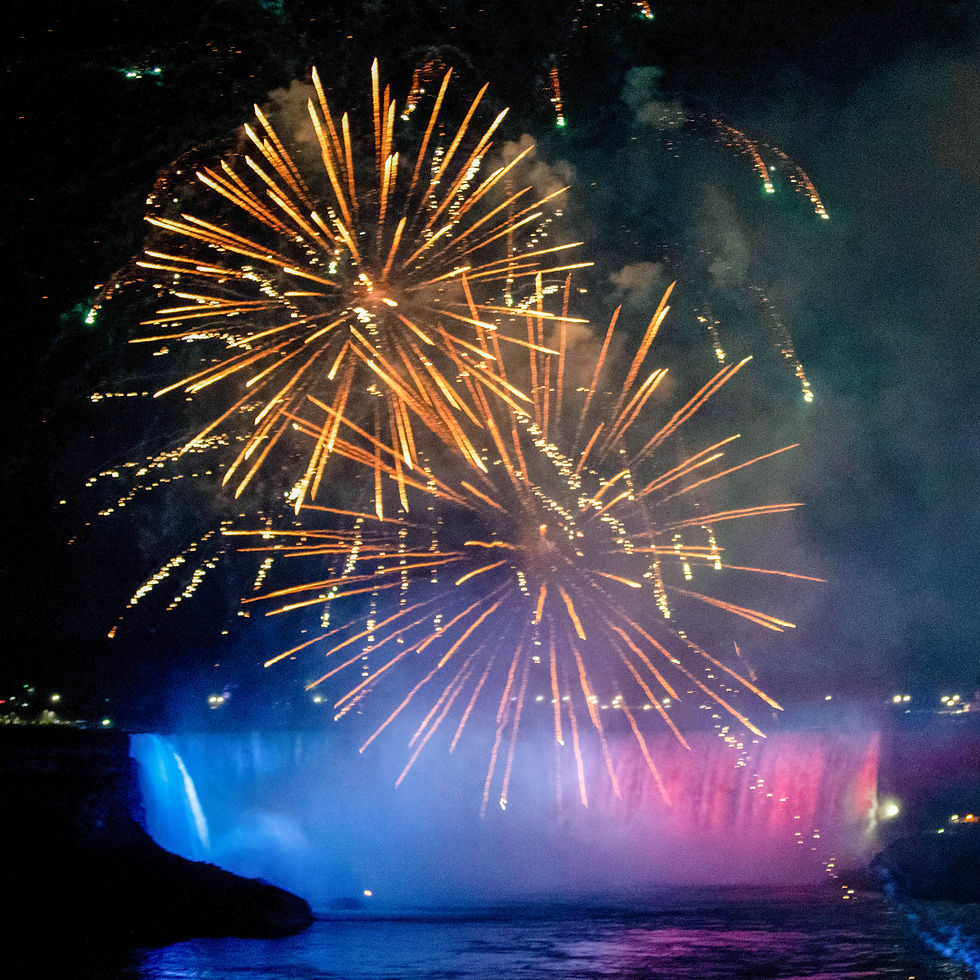
Niagara Fall, Ontario.
Comments