Portraits and Lighting: An Introduction

Updated: Nov 16, 2022
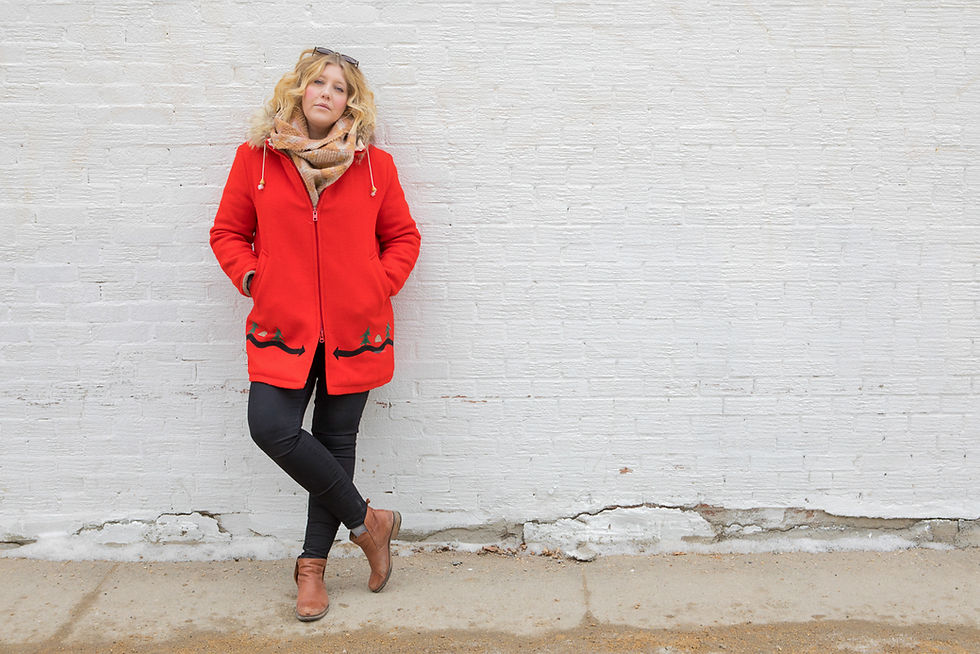
A portrait taken in front of a building's white brick exterior wall in downtown Winnipeg.
There is so much that could be written about the capturing of portraits. A few things to consider to start: when taking standard portraits:
Generally - regarding the Rule of Thirds - a person's eyes should be placed in the top third of the frame. It is important that the eyes are in focus.
The Rule of Thirds can be used in a variable of ways to capture stylized closeup and farther away portraits.
It is important to consider lighting. Direct (non-diffused) sunlight or artificial light on a person's face is not a photographer's friend. Using a diffuser can help to diffuse direct light on the face. Photographers are often pleased with a cloudy day - as the clouds act as diffusers.
'Soft boxes' can be a source of artificial direct or diffused light. They can be used to set the lighting for some very controlled and stylistic portraits.
When using an external, controllable flash, it is important to know what 'bounce flash' is, and how to use it effectively.
It is often helpful to set your metering off the cheek bones of the subject with the lightest skin.
For group photos - ensure that each person's face is fully visible.
For photos involving more than one person - consider having subjects on different 'levels'.
The hour before sunset and the first hour after sunrise and the hour Dawn - before the sun comes up over the horizon - and dusk - after the sun has just gone down over the horizon - is called 'The Golden Hour' and is a great time to take portraits and photos. Link: Taking Advantage of The Golden Hour (Adobe)
There's a start.

My beautiful Mother. With an exterior window behind her.
Comments